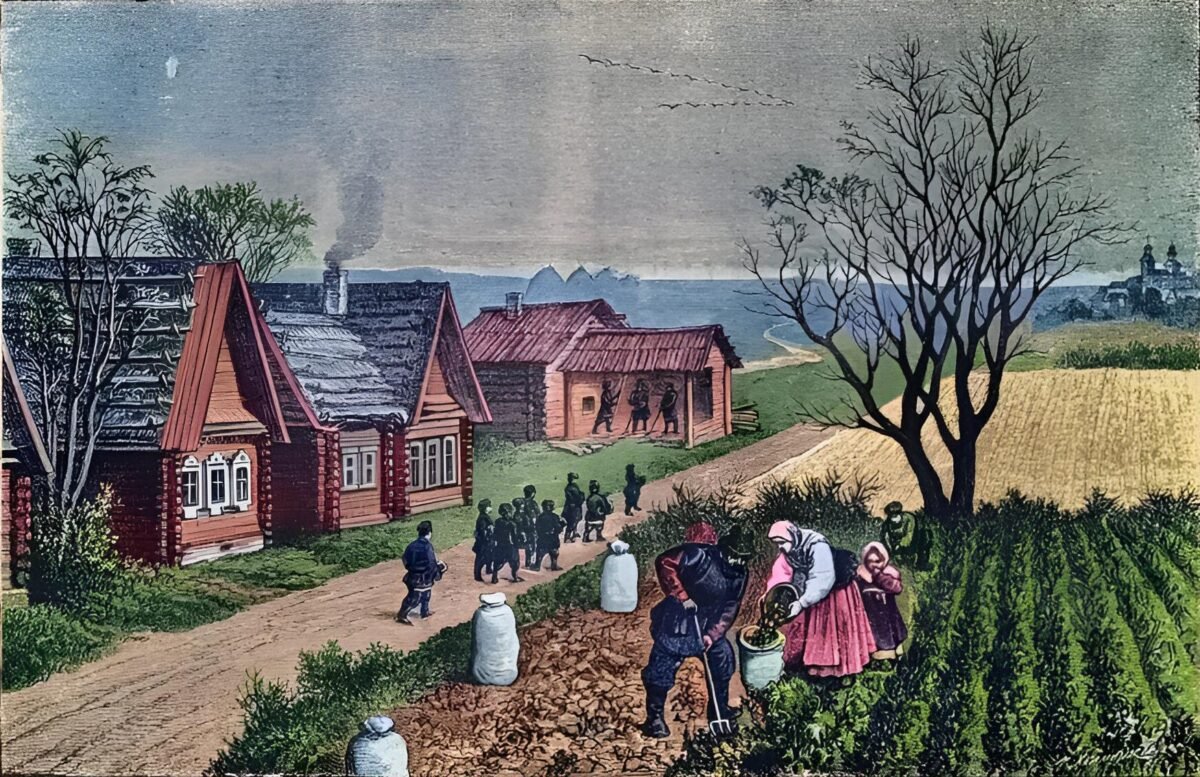
They were represented almost entirely by vegetable gardens (68.5%) and orchards (approx. 31%); within this land category, vineyards occupied an insignificant percentage—only 0.2%. Almost all households, regardless of their size, owned gardens to cover their own needs, even in the cities.
The vegetable trade was primarily managed by the German colonists in the suburbs. Although the climatic and soil conditions were favorable, Bukovina did not excel in terms of fruit tree cultivation (which was somewhat better represented toward the Dniester or along the Prut and Suceava valleys).
Fruit trading was primarily carried out by the communities of Toporăuți, Costești, Bosanci, and Securiceni; the inhabitants of Lipovan villages were also well-known for the fruit trade, engaging in their purchase from larger orchards and selling them throughout Bukovina or Galicia. Among the apple varieties, the măr domnesc (princely apple) was the most highly prized, but there were also more exotic species such as Borsdorf, Renette, Calville, or the Tyrolean apple. The walnut tree was found in almost all orchards within the hilly areas (forming more compact groves near Costești). Plum production was also highly representative, with the best considered to be those from Bosanci, Uidești, Securiceni, or Costești. Most of them were dried, boiled, or used to make plum brandy (shlivovitz). Smallholders also cultivated watermelons and muskmelons (in the eastern half of the province). Viticulture was traditionally practiced between Bosanci and Chilișeni, along a hill with favorable slopes. However, the area occupied by vineyards was quite small, and the wines were of poor quality. Only large landowners were concerned with planting better grape varieties (Moldavian, German, or Hungarian). By the mid-nineteenth century, significant viticultural areas were also characteristic of the Prut Valley.