
They covered nearly half of the province's territory; however, prior to the annexation, they were even more extensive. They were also notable for the quality of their timber. In the mountainous areas, conifers predominated—represented by firs, spruces, and, to a lesser extent, pines. The tall coniferous forests of the Moldavian Câmpulung region were considered excellent for constructing ship beams or masts over 36 meters high; the forests in the vicinity of Russian Câmpulung (Câmpulung Rusesc) were also extremely important for domestic needs and the timber trade toward Bessarabia and Moldavia.
Among the hardwoods, which were specific to the lower mountains and hills, the beech stood out (from which the province's name originates), along with the maple, alder, and linden. Tradition also mentions the extensive oak forests (mixed with elms and ashes) planted by Stephen the Great near Chernivtsi, Siret, and Suceava to commemorate his victory against John Albert, the King of Poland. Until 1800, these spanned over 11,500 hectares; however, their area was significantly reduced by the mid-nineteenth century (they mostly still appeared near Ocna (Okna), Cernăuca (Czernawka), Jucica (Zuczka), Stănești, Oprișeni, Tereblești (Tereblestie), and Volcineț (Woltschenetz). Around the same period, the vast birch forests in the mountains disappeared (their bark had been used to produce cart grease), and yew specimens became extremely rare (having been exploited for making furniture, staves, shingle nails, or timber). According to the cadastral survey, the major forest owners were the religious fund (49%—in the Rădăuți district and the Vama-Humor-Solca area) and the cameral or state fund (15%—the Câmpulung Moldovenesc-Vatra Dornei area). Most private or communal forests were located in the territory currently belonging to Ukraine. There, management was poorer, with logging carried out unsystematically and excessively, especially near settlements. Often, large areas were burned just to clear new pastures. However, the less accessible forests in the mountains remained old-growth forests, where tree trunks rotted without being utilized. The new forestry law, which entered into force on January 1, 1853, was intended precisely to eliminate the irregularities in the Bukovinian forests. Nevertheless, some of the damage caused by deforestation was irreparable (e.g., soil erosion and hillsides affected by landslides).
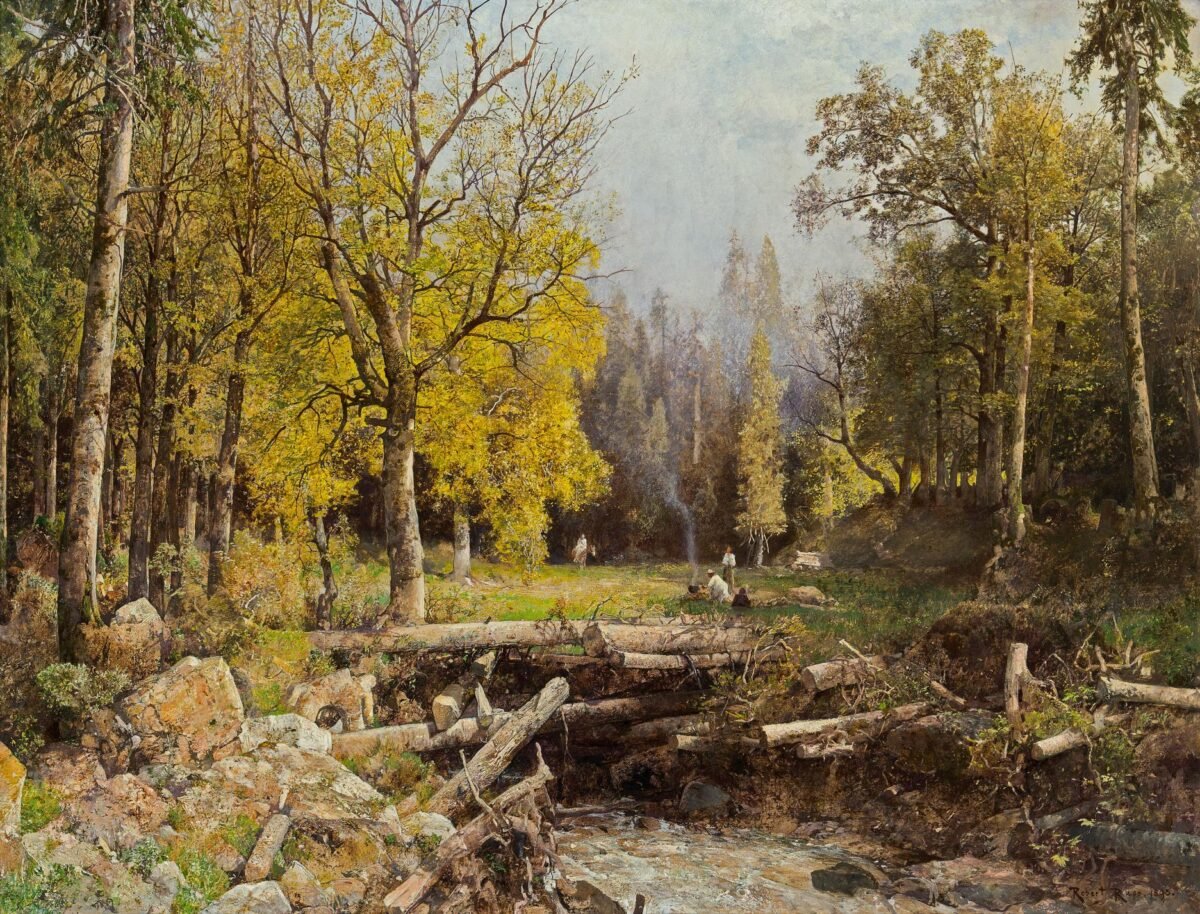
The transport of timber from the forests was partially facilitated by the river network. When water levels were high, firewood from the forests of Russian Câmpulung (Câmpulung Rusesc) was transported along the Cheremosh and Prut rivers toward Chernivtsi, and then onward to Boian and even further into Bessarabia. The same process was used on the Suceava and Moldova rivers (the latter only during certain periods) or the Bistrița (a more regular navigable waterway). There were also situations where the water transport of logs was restricted by the presence of watermill dams—around 1850, there were 32 gristmills and 23 sawmills on the Siretul Mare, and 17 gristmills and 13 sawmills on the Siretul Mic.
Starting in 1815, the Austrian authorities also began to consider utilizing timber for shipbuilding (especially mast timber), which was specific to the southern part (Dorna–Câmpulung Moldovenesc). The trade developed slowly until 1841, when the merchant Hügel successfully reached Galați with the first timber rafts. Although the journey was repeated in the following years, the difficulties were numerous: navigation along the Bistrița and then the Siret rivers was not without peril, the leadership of the Moldavian Principality was reluctant to allow transit through its territory, expenses were high, and profits were low. It was only between 1847 and 1852, following the conclusion of contracts with Turkish merchants and a convention with the Moldavians regarding free navigation, that business began to thrive. An initial management plan indicated that about 1,000 masts of various sizes could be delivered annually from just the most accessible transport locations. For the smooth operation of the activity, hydro-technical improvements and river corrections were carried out on the Bistrița, Dorna, and Coșna rivers, and a secondary transport route along the Moldova River was also taken into consideration.