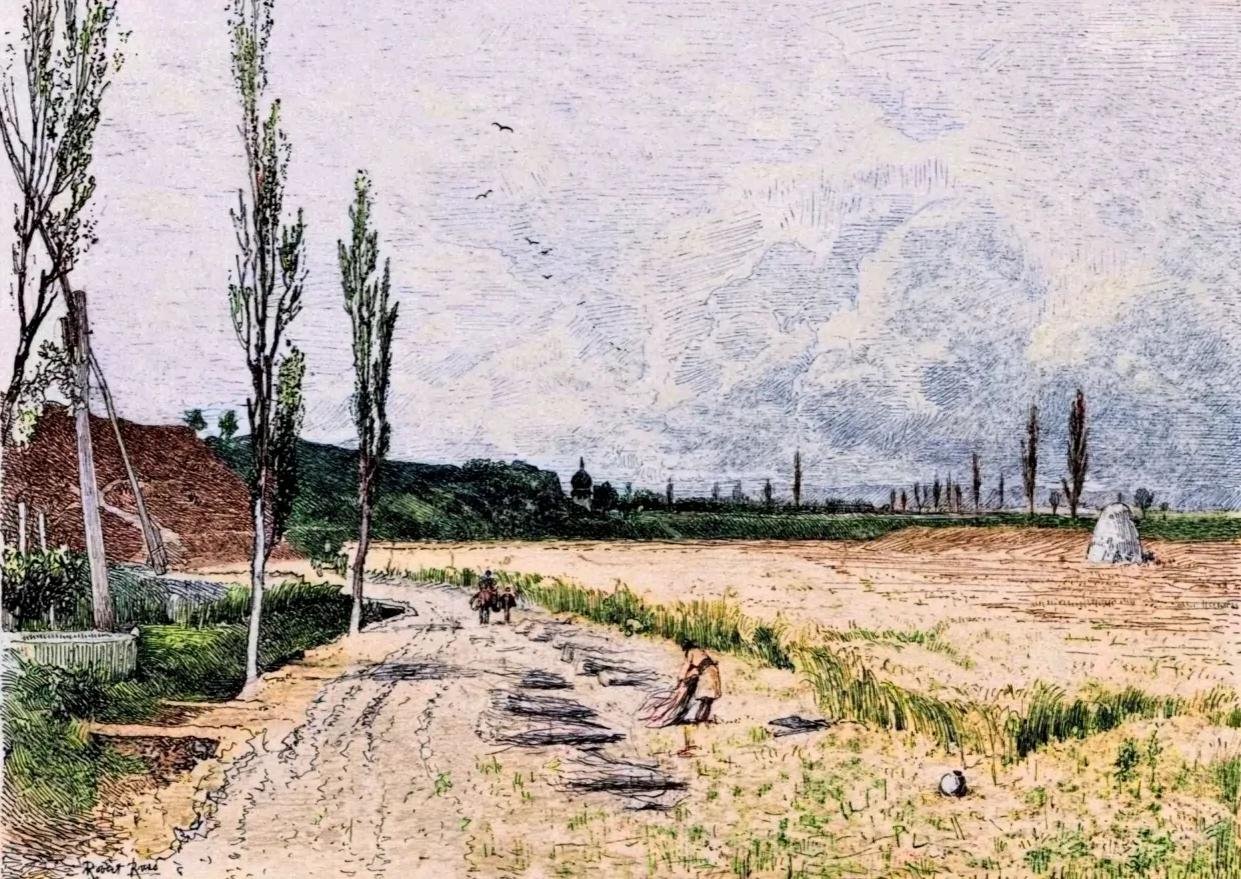
At least half of the arable lands in Bukovina were cultivated with corn (cucuruz), which was important for the Romanian and Ruthenian Orthodox population that observed numerous and strict fasting periods. The spread of the potato blight between 1842 and 1852 led to an increase in the production and profitability of this crop—used for human consumption, livestock feed, or alcohol production. Often, in the cornfields of smallholders, crops of pumpkins, squash, beans, turnips, or sunflowers also appeared. The cultivation of oats also experienced a major expansion, particularly in areas used for horse breeding, such as the Rădăuți estate; reliable sales to the imperial stud farm command located here prompted many farmers in the Siret and Suceava valleys to prefer it. Less significant in terms of production were the crops of rye, especially in the Prut Valley (with consumption limited to the needs of the imperial military, the civilian population of larger towns, or colonists of German, Hungarian, and Slavic nationality), wheat (mainly on the lands of large landowners in the north), or barley (also toward the Dniester, for breweries and distilleries). Other lands were cultivated with millet and buckwheat.
The cultivation of potatoes began only in the third decade of the nineteenth century, but it experienced rapid progress. Similar to corn, potatoes were used for human consumption, livestock feed, or alcohol production. Before 1848, spirit distilleries in Bukovina were supplied exclusively with potatoes and an addition of barley malt, whereas, by 1854, nearly the entire alcohol production relied on corn, with the addition of rye and barley.
The crops of legumes (beans, and a small amount of peas or lentils scattered through the corn rows), beets, cabbage, or cucumbers occupied limited areas. Red beets were cultivated by every farmer for the essential borscht (ciorbă); white beets were regularly grown only in grain fields by German colonists, and these same farmers also produced a small quantity of turnips used for animal feed; cabbage was cultivated mainly in Hungarian colonies along the Suceava River, the southern border, but also in other parts. Compared to other imperial provinces, Bukovina was notable for having the most extensive cucumber crops—a large portion of the harvest was soured without vinegar (pickled cucumbers) and consumed during fasting periods.